The Big Three: Emerald, Ruby and Sapphire Compared
Last updated
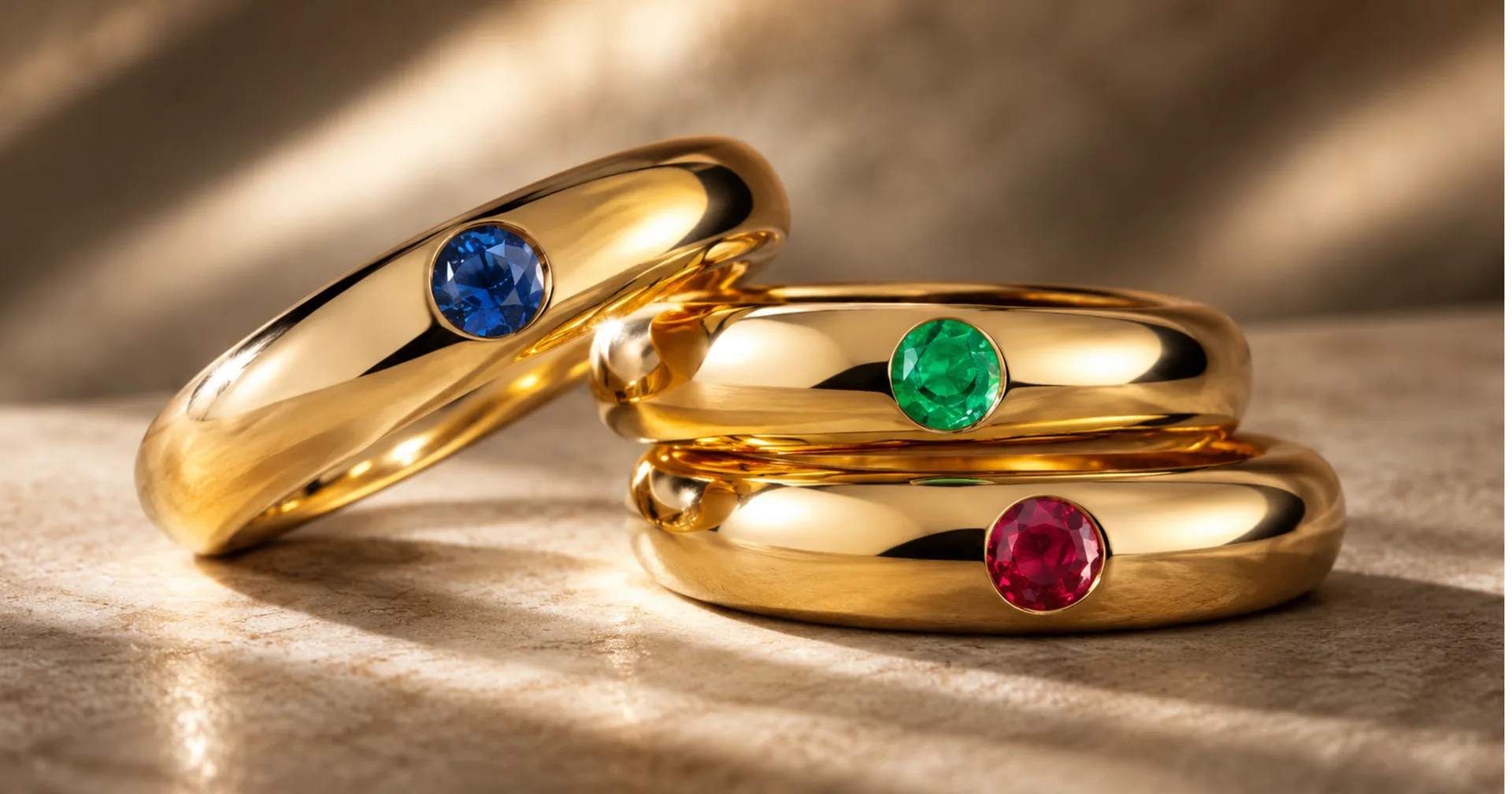
For most of recorded history there were four precious stones: diamond, emerald, ruby and sapphire. Everything else was semi-precious, a distinction gemologists no longer take seriously, since a fine spinel can be worth more than a poor emerald. But the three colored stones in that old list have kept their standing for a reason. They are beautiful, they are durable enough to survive centuries of wear, and they are rare in the qualities people actually want.
If you own one, or are deciding between them, the differences that matter are not the ones most sales counters lead with.
Side by side
| Emerald | Ruby | Sapphire | |
|---|---|---|---|
| Mineral | Beryl | Corundum | Corundum |
| Prized color | Pure, vivid green | Vivid, pure red | Vivid, even blue |
| Hardness (Mohs) | 7.5 to 8 | 9 | 9 |
| Most prized origin | Colombia | Burma (Myanmar) | Kashmir, then Burma and Ceylon |
| Inclusions | Expected, part of its nature | Common; fine silk is normal | Common; fine silk is normal |
| Usual treatment | Oil or resin in fractures | Heat | Heat |
| Treatment to watch | Heavy resin filling | Lead glass filling | Surface diffusion |
| Everyday wear | Needs care, brittle | Excellent | Excellent |
Two minerals, three stones
The first thing worth knowing is that this is not a list of three mineral species. Ruby and sapphire are both corundum, chemically identical, separated only by color: red is ruby, everything else is sapphire. Emerald is a different mineral entirely, a green variety of beryl, and that difference is the reason emerald behaves so differently in a ring.
Durability is the practical difference
Corundum sits at 9 on the Mohs hardness scale, directly below diamond and well above almost everything else in a jewelry box. A ruby or sapphire in a ring worn every day will still look right in twenty years. Emerald is 7.5 to 8, which sounds close but understates the gap, and more importantly it is brittle: the inclusions that make an emerald an emerald are planes of weakness, and a hard knock can chip or crack a stone that a sapphire would shrug off.
This is the single most useful thing to know when choosing. An emerald is not a poor choice for a ring, but it is a choice that asks something of you.
Color drives value in all three
In every one of these stones, color outweighs every other factor. The pattern repeats: the most valuable example is vividly saturated without being so dark it stops returning light, and evenly colored across the face of the gem. A pale stone drops sharply; so does one that has gone inky or brownish.
Clarity works differently than it does with diamonds. All three are expected to contain inclusions, and in ruby and sapphire the fine needles called silk can actually help confirm that a stone is natural rather than laboratory-grown. In emerald the inclusions are so characteristic that the trade named them the jardin, the garden. The question is never whether a colored stone has inclusions, but whether they dull it or weaken it. Read more on emeralds →, rubies → or sapphires →
Where treatment splits them apart
Each of the three has a routine treatment the trade accepts and a heavier one that guts value. Emeralds are oiled, which has been standard practice for generations; heavy resin filling is another matter. Rubies and sapphires are heated, which is equally standard; glass filling in ruby and surface diffusion in sapphire are not.
None of this is visible across a counter, and the heavier treatments exist precisely because they make inexpensive material look like something it is not. Understanding what has been done to a stone is usually the difference between an accurate valuation and a wrong one. Learn more about treated vs untreated stones →
Which one is worth the most?
The honest answer is that the question has no answer in the abstract. At the very top of the market, exceptional untreated Burmese rubies have set the highest per-carat records among colored stones. But a superb Colombian emerald or a confirmed Kashmir sapphire will outvalue an ordinary ruby by a wide margin. Comparing categories tells you very little; comparing two specific stones tells you everything.
Bringing yours to Coin Mart
Whether you are choosing between the three, selling one, or trying to understand a piece that came down through your family, we evaluate every stone in front of you and explain what we see, so you leave knowing more than when you walked in. Back to Precious Gemstones →
Frequently Asked Questions
- What are the big three gemstones?
- Emerald, ruby and sapphire. Together with diamond they make up the four stones traditionally called precious, and the three colored ones are the gems the jewelry trade has valued most highly for centuries.
- Which of the three is most valuable?
- It depends entirely on the individual stones. At the very top of the market, fine untreated rubies have reached the highest prices per carat, but a superb emerald or Kashmir sapphire can exceed an ordinary ruby many times over.
- Why are ruby and sapphire the same mineral?
- Both are corundum. When the stone is red it is called a ruby; every other gem-quality color, including blue, is called sapphire. The split is a trade convention, not a difference in the mineral itself.
- Which is the best choice for an engagement ring?
- Ruby and sapphire, both at 9 on the Mohs scale, stand up to daily wear far better than emerald, which is brittle because of its inclusions. An emerald engagement ring is beautiful but asks for more care.
- Are the big three always more valuable than other colored stones?
- No. A fine alexandrite, paraiba tourmaline or top spinel can be worth more than a mediocre example of any of the three. The big three are the most consistently valuable, not automatically the most valuable.
- Do all three get treated?
- Nearly all commercial stones of all three are treated in some way, and for each the usual treatment is accepted in the trade. What changes value sharply is the heavier treatment: resin filling in emerald, glass filling in ruby, diffusion in sapphire.
Visit Coin Mart Jewelry
📍 396 E St, Chula Vista, CA · Est. 1959
Bring your stones in for an honest, expert evaluation of all three. Walk in or send us a message.