Emeralds: Value, Quality and How They Are Evaluated
Last updated
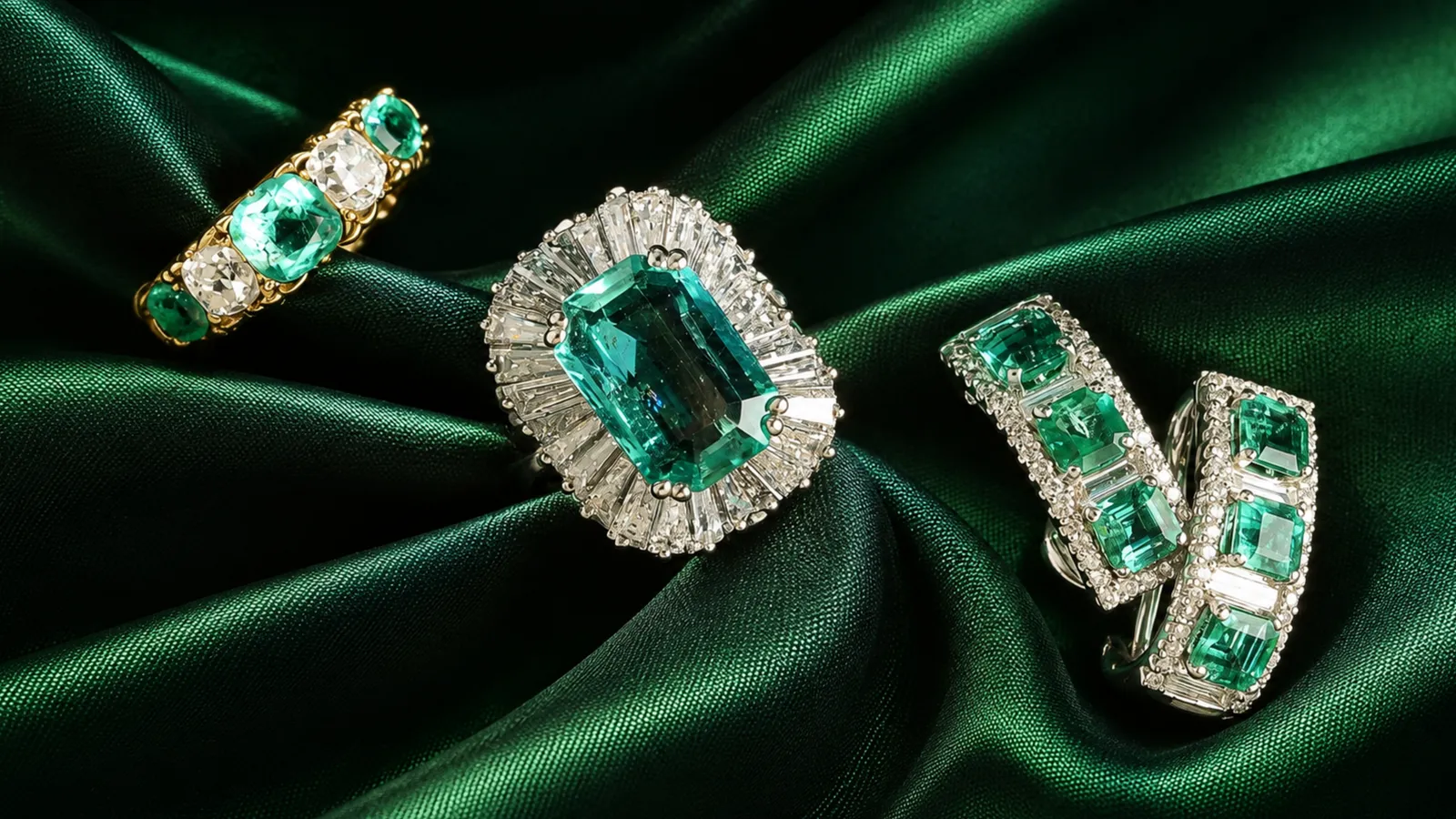
Of all the colored gemstones, the emerald may be the most romantic. Its deep green has been treasured since ancient Egypt, worn by royalty across every era, and it remains one of the three most important colored stones in the world. If you own an emerald, here is what actually determines its worth.
Color is everything
With emeralds, color carries more weight than any other factor. The most valuable stones show a pure, vivid green, sometimes with a faint bluish undertone, that is strong without being so dark it loses life. A stone that is too pale reads as ordinary green beryl rather than true emerald, and loses much of its value. The richer and more even the green, the more the stone is worth.
The nature of emerald clarity
Emeralds are different from most gems in one important way: nearly all of them contain visible inclusions. These internal features are so characteristic that they are often called the “jardin,” French for garden, because they can look like foliage inside the stone. Rather than being seen as flaws, they are accepted as part of an emerald's nature, and a flawless emerald is so rare it is treated with suspicion. What matters is whether the inclusions are so heavy that they threaten the stone's durability or dull its beauty.
A quick reference
| Factor | What raises value |
|---|---|
| Color | Pure, vivid green with strong saturation |
| Clarity | Inclusions expected; fewer and less visible is better |
| Cut | The "emerald cut" was designed for this stone to protect it and show color |
| Origin | Colombia is the most prized source; Zambia and Brazil also notable |
| Treatment | Untreated stones are far rarer and more valuable |
| Hardness | 7.5 to 8 on the Mohs scale, durable but more brittle than ruby or sapphire |
Why origin matters so much
Colombia has produced the world's most celebrated emeralds for centuries, and a fine Colombian stone can carry a meaningful premium over similar material from elsewhere. Zambia and Brazil are also important sources, each with its own character. Origin is not something you can confirm by eye, which is one more reason an expert evaluation matters.
The treatment question
Here is the detail most sellers never mention: the large majority of emeralds are treated with oil or resin to fill surface-reaching fractures and improve their apparent clarity. This is a long-accepted practice, but it matters enormously for value. An emerald with little or no treatment is dramatically rarer than a heavily treated one, and worth far more. When we evaluate an emerald, assessing treatment is central to telling you what it is truly worth. Learn more about treated vs untreated stones
What we see at the counter
A common surprise for people selling an inherited emerald is learning how much treatment affects the number. A stone that looks beautiful may have been heavily treated to get there, while a more modest looking stone that is natural and untreated can be worth considerably more. Our job is to tell you the honest story of the stone in your hand, not the flattering one.
Buying or selling an emerald at Coin Mart
Whether you want to buy a fine emerald, sell one, or understand an inherited piece, we evaluate every stone in front of you, assessing its color, clarity, origin, and treatment, and we explain what each means for value. Back to Precious Gemstones →
Frequently Asked Questions
- What makes an emerald valuable?
- Color above all, specifically a rich, pure green. Clarity, size, origin, and whether the stone is treated also play major roles.
- Are emeralds supposed to have inclusions?
- Yes. Nearly all natural emeralds contain inclusions, so visible internal features are normal and even expected. A completely flawless emerald is extremely rare.
- Are emeralds more valuable than diamonds?
- A top-quality emerald can be worth more per carat than a diamond, though it depends entirely on the specific stones being compared.
- Why are Colombian emeralds special?
- Colombia has historically produced the finest emeralds, known for their exceptional green, and stones from there can carry a premium.
- Is my emerald treated?
- Most emeralds are treated in some way. Confirming the type and extent of treatment takes expert evaluation, and it strongly affects value.
- Are emeralds durable enough for everyday wear?
- Emeralds are fairly hard but more brittle than rubies or sapphires because of their inclusions, so they need a little more care, especially in rings.
- Can you evaluate an emerald still set in a ring?
- Yes. We evaluate both loose emeralds and stones set in jewelry.
Visit Coin Mart Jewelry
📍 396 E St, Chula Vista, CA · Est. 1959
Bring your emerald in for an honest evaluation of its color, origin, and treatment. Walk in or send us a message.