Rubies: Value, Quality and How They Are Evaluated
Last updated
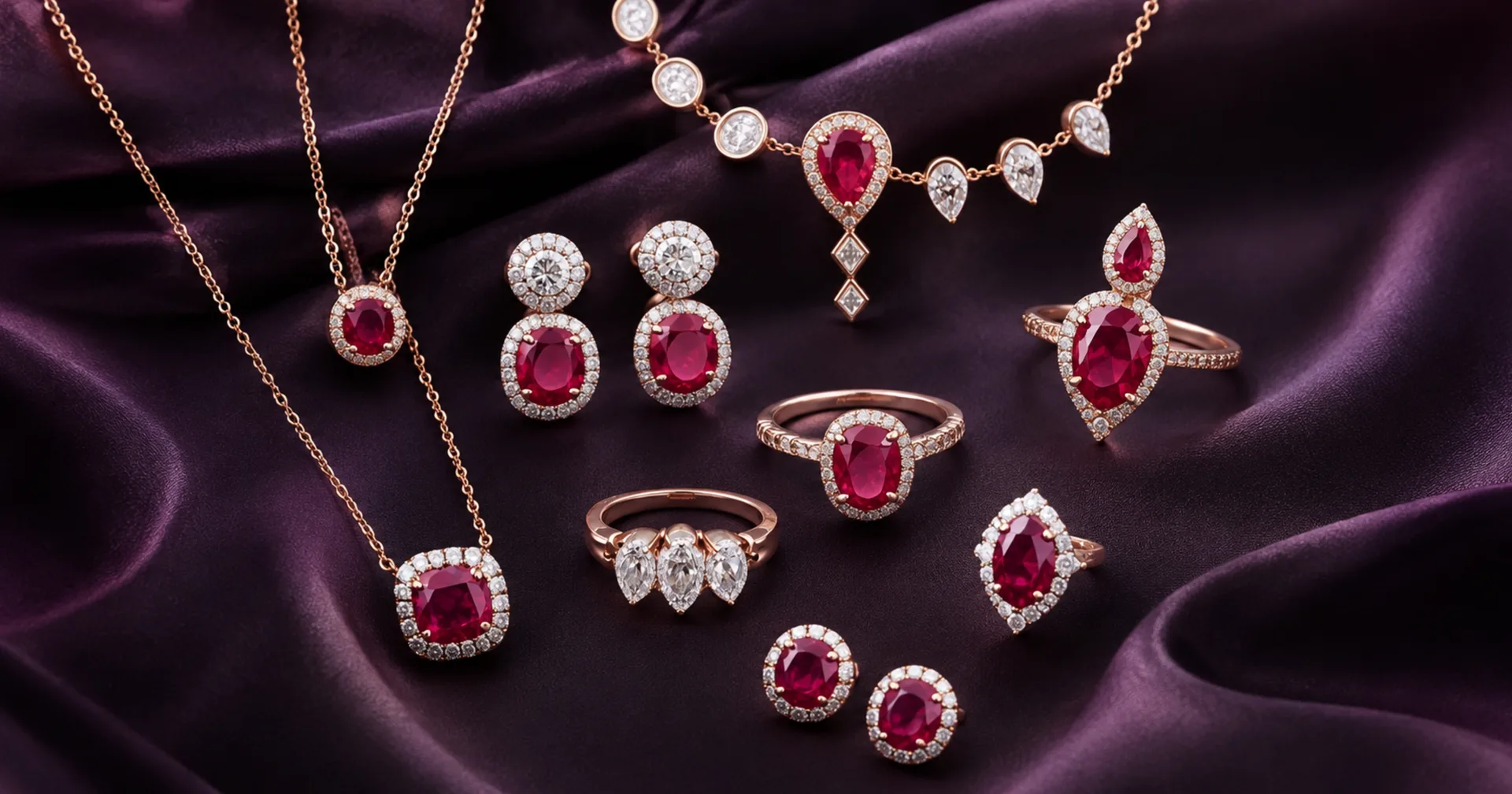
The ruby has been the stone of kings for as long as there have been kings. For centuries it was valued above almost everything else, worn as a talisman in battle and set into crowns from Burma to Europe. It remains one of the three most important colored stones in the world, and the finest examples sell for more per carat than diamonds. If you own one, here is what actually determines its worth.
Color decides most of it
With rubies, nothing else comes close to color in importance. The most valuable stones show a pure, intensely saturated red, sometimes with a faint blue undertone, the quality the trade calls “pigeon blood.” A stone that drifts toward brown or orange loses value quickly, and one too dark to return light reads as heavy rather than brilliant. The ideal is a red that is strong and even without going black in the shadows.
There is a second question hiding inside color. Ruby and sapphire are the same mineral, and the only thing separating a ruby from a pink sapphire is how strong the red is. That line is a matter of judgment rather than a measurement, so where a particular stone falls can meaningfully change what it is worth.
Clarity, and the silk inside
Like most colored stones, rubies are expected to contain inclusions, and a flawless one is rare enough to invite suspicion. Fine needle-like inclusions, known as silk, are a normal part of a natural ruby and can actually help confirm that the stone grew in the ground rather than a laboratory. What matters is whether the inclusions are heavy enough to dull the stone or threaten its durability.
A quick reference
| Factor | What raises value |
|---|---|
| Color | Vivid, pure red with strong saturation; the single biggest factor |
| Clarity | Some inclusions are normal; fine silk can even help confirm a natural stone |
| Cut | A good cut keeps the color even across the stone and avoids dark windows |
| Origin | Burma (Myanmar) is the most prized source; Mozambique and Thailand also notable |
| Treatment | Heat is common and accepted; glass filling drops value dramatically |
| Hardness | 9 on the Mohs scale, second only to diamond, so it wears very well |
Why origin matters
Burma, now Myanmar, has produced the world's most celebrated rubies for centuries, and a fine Burmese stone can carry a significant premium over similar material from elsewhere. Mozambique has become a major source of excellent rubies in recent decades, and Thailand has long produced darker stones. Origin cannot be confirmed by eye, which is one more reason an expert evaluation matters.
The treatment question
Here is the detail that surprises people most. The large majority of rubies on the market have been heated, a practice that has been accepted in the trade for generations and that does not destroy a stone's value. An untreated ruby of fine color is dramatically rarer and worth considerably more.
Glass filling is a different matter entirely. Heavily fractured, low-grade ruby can be injected with lead glass so the cracks disappear and the stone looks clear and bright. These are sold openly, they look convincing across a counter, and they are worth a small fraction of a comparable natural ruby. They are also fragile: ordinary jewelry cleaning or a repair torch can damage the filling. Telling the two apart is central to any honest evaluation. Learn more about treated vs untreated stones
What we see at the counter
The most common disappointment we have to deliver involves a large, bright, inexpensive-looking red stone that turns out to be glass filled. The second most common is the opposite: someone brings in a modest, slightly included ruby from a grandmother's ring and learns it is natural, untreated and worth far more than they assumed. Our job is to tell you the honest story of the stone in your hand, not the flattering one.
Buying or selling a ruby at Coin Mart
Whether you want to buy a fine ruby, sell one, or understand an inherited piece, we evaluate every stone in front of you, assessing its color, clarity, origin and treatment, and we explain what each means for value. Back to Precious Gemstones →
Frequently Asked Questions
- What makes a ruby valuable?
- Color above all. A vivid, pure red with strong saturation is worth far more than a dark or brownish stone. Size, clarity, origin and whether the stone has been treated then shape the rest.
- What is a pigeon blood ruby?
- It is the trade term for the most prized ruby color, an intensely saturated red with a slight blue undertone. It is a description used in the market rather than a formal grade, so what one seller calls pigeon blood another may not.
- Are rubies more valuable than diamonds?
- A fine untreated ruby can be worth more per carat than a diamond of the same weight, and the very best examples are among the most expensive gemstones in the world. It always depends on the specific stones being compared.
- Is my ruby heat treated?
- Most rubies on the market are, and heat alone is a long-accepted practice that does not ruin value. Confirming the type and extent of treatment takes expert examination.
- What is a glass filled ruby?
- It is a heavily fractured stone whose cracks have been filled with lead glass to make it look clearer. These are sold widely and look convincing, but they are worth a small fraction of a comparable natural ruby and are fragile in everyday wear.
- What is the difference between a ruby and a red sapphire?
- They are the same mineral, corundum. When the red is strong enough it is called a ruby; when it is too light or leans pink it is called a pink sapphire. Where exactly that line falls is a judgment call, and it can change the value of the stone significantly.
- Are rubies good for everyday rings?
- Yes. At 9 on the Mohs scale a natural ruby is one of the most durable gemstones you can wear daily. Glass filled stones are the exception and need real care.
- Can you evaluate a ruby still set in a ring?
- Yes. We evaluate both loose rubies and stones set in jewelry.
Visit Coin Mart Jewelry
📍 396 E St, Chula Vista, CA · Est. 1959
Bring your ruby in for an honest evaluation of its color, origin and treatment. Walk in or send us a message.