Birthstones by Month: The Complete List
Last updated
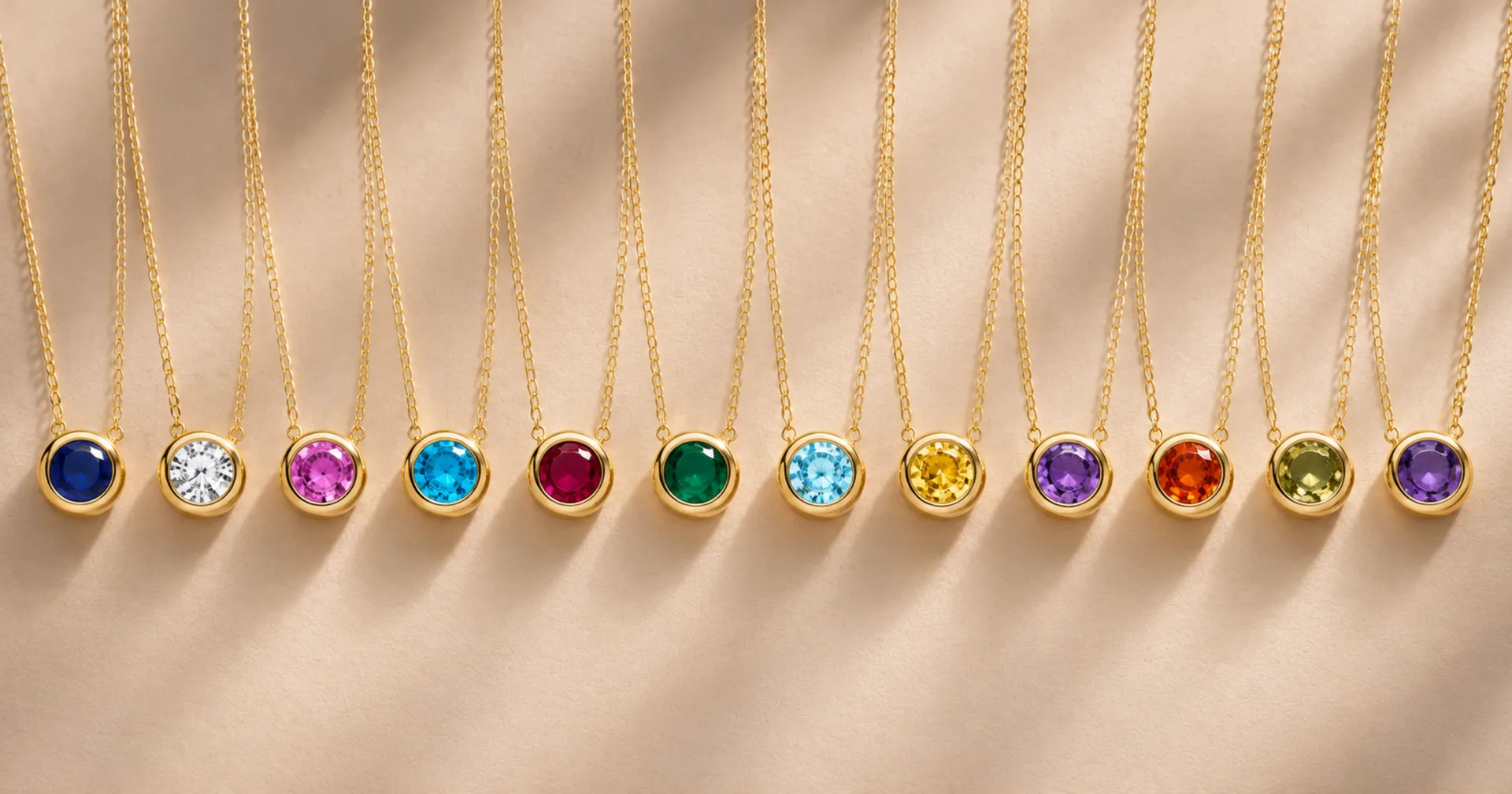
Birthstones feel ancient, and the idea behind them is: lists of twelve stones tied to months or zodiac signs go back a very long way. The list Americans actually use, however, is younger than the telephone. It was standardized in 1912 by what is now Jewelers of America, largely so that shops across the country would stop selling customers different answers, and it has been revised a handful of times since.
That history is worth knowing because it explains the oddities: why some months have three stones and others one, and why the list is generous in the months whose stone is expensive.
The complete list
| Month | Modern | Traditional | Hardness (Mohs) |
|---|---|---|---|
| January | Garnet | — | 6.5 to 7.5 |
| February | Amethyst | — | 7 |
| March | Aquamarine | Bloodstone | 7.5 to 8 |
| April | Diamond | — | 10 |
| May | Emerald | — | 7.5 to 8 |
| June | Pearl, moonstone | Alexandrite | 2.5 to 4 (pearl) |
| July | Ruby | — | 9 |
| August | Peridot, spinel | Sardonyx | 6.5 to 7 (peridot) |
| September | Sapphire | — | 9 |
| October | Opal, tourmaline | — | 5.5 to 6.5 (opal) |
| November | Topaz, citrine | — | 7 to 8 |
| December | Turquoise, tanzanite, zircon | Lapis lazuli | 5 to 6 (turquoise) |
Four months got lucky
April, May, July and September are diamond, emerald, ruby and sapphire, which is to say the four stones the trade has valued above all others for centuries. A fine natural example from one of those months can be worth many multiples of an equally beautiful stone from another. That is not a judgment about the stones; garnet and amethyst are lovely, and were themselves once rare and costly. It is simply where supply landed.
It also explains the most common disappointment we see in birthstone jewelry. When the birthstone is expensive, mass-market pieces very often use a synthetic or a treated stone instead, and the piece was never represented otherwise. Synthetic ruby in a July ring is extremely common. More on emerald, ruby and sapphire →
Hardness decides what you can actually wear
The practical column in the table above is the last one. A ring takes more punishment than any other piece of jewelry, and the spread across the twelve months is enormous.
Excellent for daily rings: diamond, ruby, sapphire, topaz, aquamarine, spinel.
Fine with reasonable care: garnet, amethyst, citrine, tourmaline, emerald, though emerald is brittle and needs more thought than its hardness suggests.
Better in earrings and pendants: pearl, opal, turquoise and peridot. Pearl at 2.5 to 4 is softer than many surfaces it will meet, opal can crack from a sharp change in temperature, and turquoise is porous enough to absorb lotion and perfume.
If June, October or December is your month and you want a ring, it can absolutely be done. It just wants a protective setting and a little discipline about taking it off.
Modern and traditional lists
Several months carry an older stone alongside the modern one, and you will meet both. March has bloodstone behind aquamarine, August has sardonyx behind peridot, December has lapis lazuli. Neither list is incorrect, and a piece set with the traditional stone is not a mistake, which is useful to know if you have inherited something that does not match what a chart on a website told you.
What birthstone jewelry is worth
It varies as widely as jewelry does generally. We see everything from plated mothers' rings with synthetic stones to genuinely fine natural gems in substantial gold settings. The questions are always the same: is the stone natural, what quality is it, has it been treated, and what is the metal. Bring the piece in and we will answer each of those in front of you. How selling a gemstone works →
At Coin Mart
Birthstone jewelry is often a gift, and often sentimental, and we handle it that way. If the honest answer is that a piece is worth more to you than to any buyer, we will say so. Back to Precious Gemstones → or explore our fine jewelry →
Frequently Asked Questions
- Who decides what the birthstones are?
- The modern list used in the United States was standardized by the national jewelers association in 1912 and has been amended a few times since, most recently with the addition of spinel for August in 2016. It is a trade convention rather than an ancient tradition.
- Why do some months have more than one birthstone?
- Mostly availability and price. A second or third option gives buyers a choice when the primary stone is expensive, which is why June, August, October and December all have alternatives.
- Which birthstones are the most valuable?
- April, May, July and September, because those months are diamond, emerald, ruby and sapphire. Fine examples of any of the four can be worth many times a comparable stone from another month.
- Which birthstones are least suitable for an everyday ring?
- Pearl, opal and turquoise are the softest and most easily damaged, and peridot is not far behind. They are wonderful in earrings and pendants, where they take fewer knocks, and need real care in a ring.
- Are traditional and modern birthstones different?
- Sometimes. Several months have an older traditional stone alongside the modern one, such as bloodstone for March and sardonyx for August. Both lists are in circulation and neither is wrong.
- Is my birthstone jewelry worth anything?
- It depends entirely on the stone and the piece. Birthstone jewelry ranges from inexpensive synthetic stones in plated settings to fine natural gems in gold. We will tell you which you have.
- Are the stones in birthstone jewelry usually natural?
- Often not. Mass-market birthstone pieces frequently use synthetic or treated stones, particularly for the expensive months. That is not a defect, but it matters a great deal to value.
Visit Coin Mart Jewelry
📍 396 E St, Chula Vista, CA · Est. 1959
Bring your birthstone jewelry in and we will tell you exactly what the stones are. Walk in or send us a message.