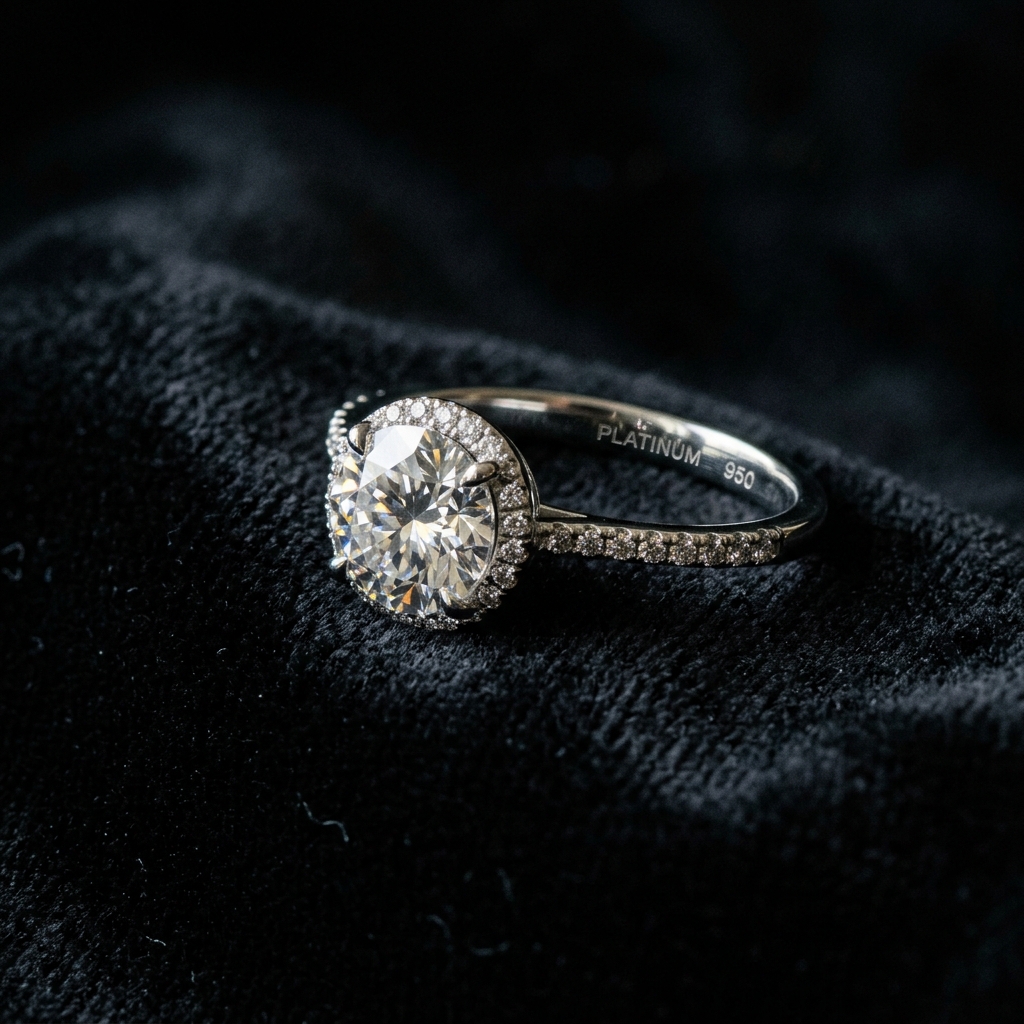
Buying an engagement ring is one of the most significant purchases of your life. But if you walk into a jewelry store without knowing the basics, the sheer amount of options and terminology can be overwhelming.
The universal language for evaluating a diamond's quality is the 4 C's: Cut, Color, Clarity, and Carat weight. Here is a simple breakdown of what they mean and which ones you should prioritize to get the most beautiful stone for your budget.
1. Cut: The Most Important C
The cut is often mistaken for the shape of the diamond (e.g., Round, Oval, Princess). However, "Cut" actually refers to how well the diamond's facets interact with light.
If a diamond is cut too deep or too shallow, light leaks out the bottom or sides, making the diamond look dull. An "Excellent" or "Ideal" cut reflects light back up to the eye, creating the intense sparkle and fire that diamonds are famous for. Pro Tip: Never compromise on cut. A smaller, well-cut diamond will always look better than a larger, poorly cut one.
2. Color: The Lack of Tint
Diamond color is graded on a scale from D (Colorless) to Z (Light Yellow or Brown). The closer to D, the rarer and more expensive the diamond.
While colorless diamonds are stunning, they carry a steep premium. Diamonds in the G-H-I range (Near Colorless) look completely white to the naked eye, especially when set in yellow or rose gold. This is a great area to save money without sacrificing visual beauty.
3. Clarity: The Natural Inclusions
Because diamonds are formed deep within the earth under extreme heat and pressure, they often contain unique birthmarks, either internal (inclusions) or external (blemishes).
The clarity scale ranges from Flawless (FL) to Included (I1, I2, I3). The secret to buying a diamond is looking for one that is "Eye-Clean." This means that while it might have imperfections under a 10x jeweler's loupe (like VS2 or SI1 grades), you cannot see them with the naked eye. Spending thousands more for a Flawless diamond won't make it look any different on her finger.
4. Carat: The Weight
Carat refers strictly to the diamond's weight, not its physical size across the top. Because large diamonds are rarer than small diamonds, the price of a diamond increases exponentially with its carat weight.
If size is your primary goal, consider a shape that looks larger for its weight, like an Oval, Pear, or Marquise cut. You can also save significantly by "buying shy", for example, buying a 0.95-carat diamond instead of a full 1.00-carat, as prices jump at exact, round numbers.
Let Us Guide You
Reading about diamonds is helpful, but nothing compares to seeing them in person. At Coin Mart, we take the time to sit down with you, show you diamonds under magnification, and educate you so you can make a confident choice without any sales pressure.